Cyber Security News

by Abinaya Abinaya No Comments

Google Blocked 1.75 Million Malicious Apps from Entering into the Play Store

AI-powered security systems blocked over 1.75 million malicious or policy-violating apps from reaching the Play Store in 2025, strengthening Android security.

According to Google’s latest Android and Google Play security update, the company blocked over 1.75 million apps during the review process.

The apps were flagged for policy violations, including embedded malware, financial fraud, aggressive data collection, and hidden subscription abuse.

Google also banned more than 80,000 “bad developer” accounts linked to harmful or deceptive apps, cutting off repeat offenders from re-entering the ecosystem under new identities.

Every submitted app now undergoes more than 10,000 automated and manual safety checks, with Google stating that these measures are designed to prevent real-world harm before apps ever reach user devices.

Safeguards block bad apps tools ease compliance(source : Google Blog)
Safeguards block bad apps, tools ease compliance (source: Google Blog)

Strengthening Privacy Controls and Data Protection

Google says it has heavily integrated its latest generative AI models into the Play review pipeline, enabling security teams to spot complex, evolving malicious patterns faster than before.

These models work alongside human reviewers to detect obfuscated behaviors, suspicious permission usage, and fraud indicators that may not be obvious from static analysis alone.

The company reports that its strengthened pre-review checks, developer verification, and mandatory testing requirements are discouraging many bad actors from even attempting to publish malicious apps on Google Play.

Expanded Play Protect to fight scams(source : Google Blog)
Expanded Play Protect to fight scams (source: Google Blog)

Beyond blocking app submissions, Google prevented more than 255,000 apps from obtaining excessive access to sensitive user data by enforcing stricter privacy controls and permission policies.

To protect the integrity of ratings and user trust, anti-spam systems blocked around 160 million fake or manipulative reviews, avoiding an average 0.5-star rating drop for apps targeted by coordinated review bombing campaigns.

For families, Google has also introduced new layers of protection to stop children from discovering or downloading apps related to high-risk categories such as gambling or dating.

New Security Tools for Android Developers

Google Play Protect, Android’s built-in malware defense, now scans over 350 billion apps every day across the Play Store and sideloaded sources.

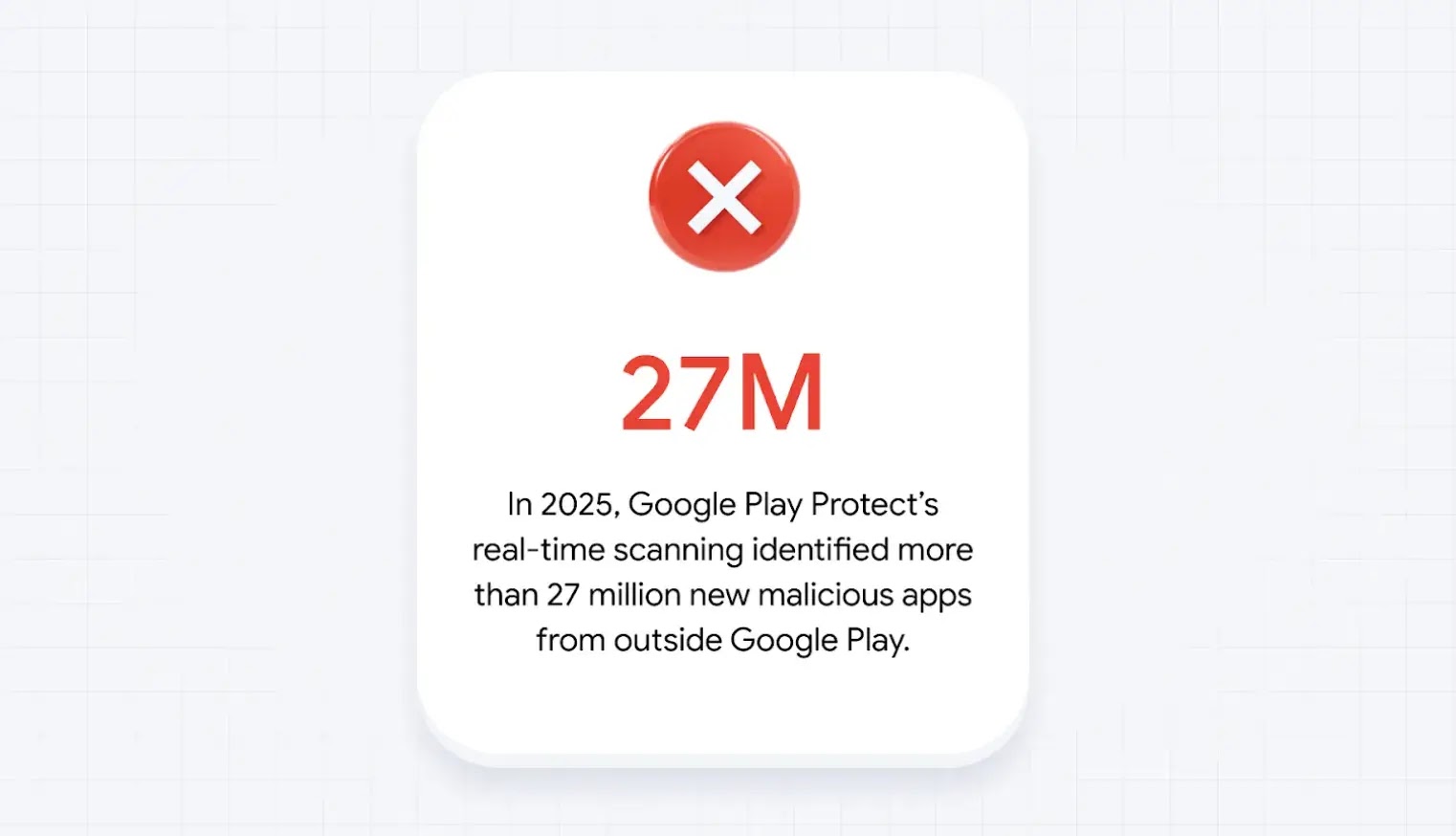
In 2025, its real-time scanning identified more than 27 million new malicious apps distributed outside Google Play, warning users or blocking installations outright to neutralize threats before they could execute.

Security Tool / Feature Purpose 2025 Update Protection Benefit
Play Policy Insights (Android Studio) Real-time policy guidance Lint-style checks flag risky permissions & APIs Prevents policy violations before submission
Pre-review checks (Play Console) Catch compliance issues early Automated checks for credentials, permissions & privacy links Blocks misconfigured or risky apps
Play Integrity API Verify app & device integrity Hardware-backed signals, stronger attestation, device recall Detects fraud, tampering & compromised devices
Developer verification Strengthen developer identity checks Expanded verification & new account types Reduces abuse from fake/throwaway accounts
Android 16 security APIs Protect sensitive app flows Tapjacking & overlay attack protections Prevents credential theft & UI hijacking

Enhanced fraud protection within Play Protect is now deployed in 185 markets and covers over 2.8 billion Android devices.

Android security relies on developer collaboration and feedback(source : Google Blog)
Android security relies on developer collaboration and feedback (source: Google Blog)

Blocked 266 million risky sideloading attempts tied to approximately 872,000 unique high-risk apps, many of them designed for financial fraud via abusive permissions.

To support developers, Google expanded Play Policy Insights in Android Studio, providing real-time feedback on risky permissions and policy compliance during development rather than only at submission time.

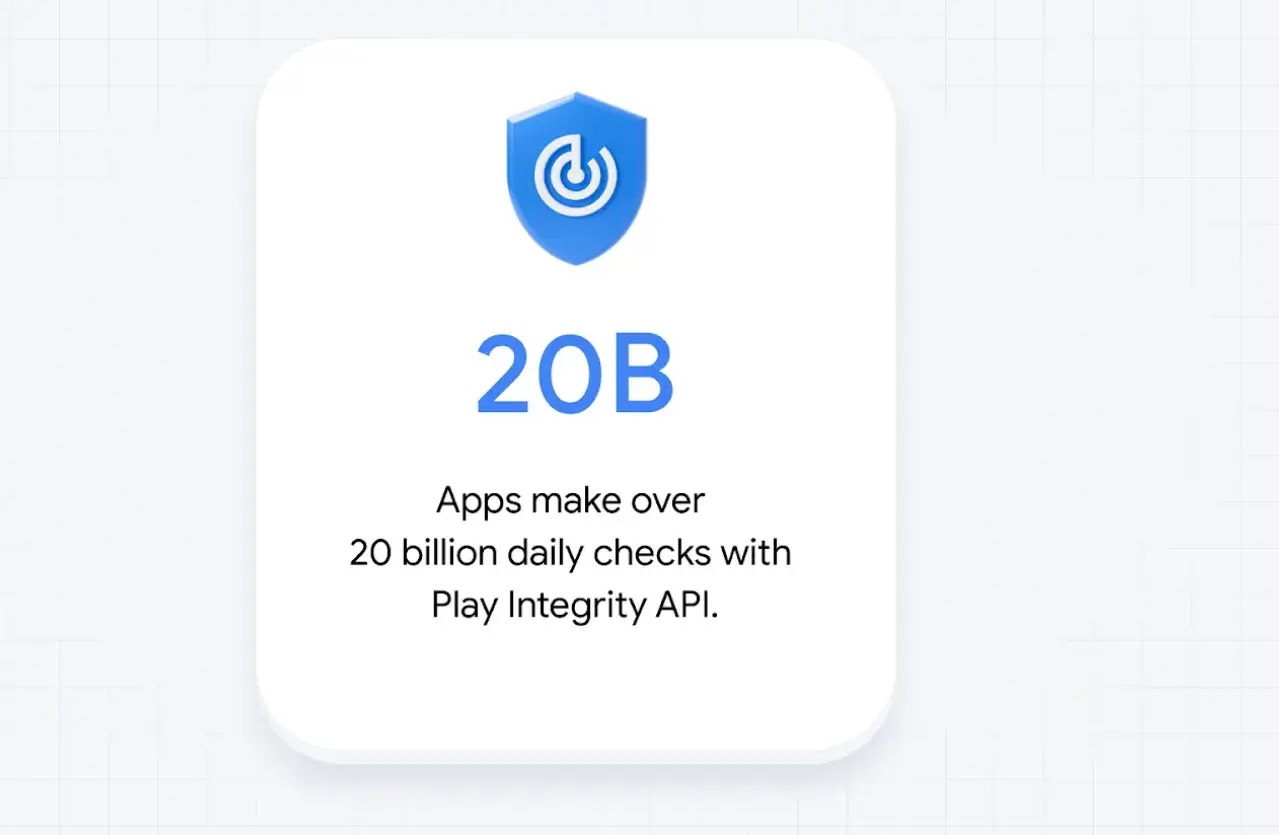
The Play Integrity API, now handling more than 20 billion checks per day, gained hardware-backed signals and in-app prompts to help apps defend against abuse, spoofed devices, and unauthorized access while preserving user privacy.

Looking ahead, Google plans to roll out broader developer verification across the Android ecosystem and continue investing in AI-driven defenses.

Aiming to make malicious apps increasingly unviable while helping legitimate developers build secure, compliant apps by design.

Follow us on Google News, LinkedIn, and X for daily cybersecurity updates. Contact us to feature your stories.

The post Google Blocked 1.75 Million Malicious Apps from Entering into the Play Store appeared first on Cyber Security News.

by Balaji N Balaji N No Comments

How to Investigate Emerging Cyber Threats in 2024 – SOC/DFIR Team Guide

In the rapidly evolving world of cybersecurity, emerging threats pose significant challenges to organizations worldwide. These threats, characterized by their novelty and complexity, often exploit new vulnerabilities and technologies, making them difficult to predict and defend against.

As cybercriminals continually refine their methods, businesses must stay informed and proactive to protect their assets. One powerful tool in this effort is the Threat Intelligence (TI) Lookup service from ANY.RUN, which provides valuable insights into these emerging threats.

Emerging threats differ from persistent threats in several ways:

  • Novel Techniques: They involve new methods and tools that have not been widely seen before.
  • Continuous Evolution: Attackers constantly refine their strategies to evade detection.
  • Unpredictability: Their unpredictable nature makes them particularly challenging to defend against.
  • Potential Impact: They can have severe implications for victims, including financial losses and reputational damage.

Why Monitoring Emerging Threats is Crucial

Many organizations struggle to handle emerging threats due to a lack of awareness, resources, or expertise. These threats can disrupt operations, lead to data breaches, and erode customer trust. Staying informed about emerging threats and taking proactive measures is essential for safeguarding organizational assets.

How Threat Intelligence Lookup Assists

ANY.RUN’s Threat Intelligence Lookup is a valuable resource for organizations looking to stay ahead of emerging threats. Powered by a global community of 400,000 security experts, the service provides access to a vast database of indicators of compromise (IOCs) and other threat data. Users can search through this data using various parameters to gather information on malware and phishing threats.

Key Features of TI Lookup:

  • Comprehensive Search: Users can search through 2TB of the latest threat data using over 40 different search parameters.
  • Quick Results: Each search provides quick results with corresponding sandbox sessions.
  • YARA Search: A built-in rule editor allows users to use custom YARA rules for more precise searches.
  • API Integration: TI Lookup can be integrated with existing security systems for seamless operation.

Examples of Emerging Threats and Investigation Methods

1. New Phishing Threats

Cybercriminals continually devise new phishing tactics, often abusing legitimate services to deceive users. For example, a recent campaign exploited Amazon Simple Email Service (SES) accounts to distribute phishing emails.

Example: Abuse of SES Accounts by Tycoon 2FA Phish-kit 

Recently, ANY.RUN researchers spotted a phishing campaign exploiting compromised Amazon Simple Email Service (SES) accounts to distribute phishing emails.  

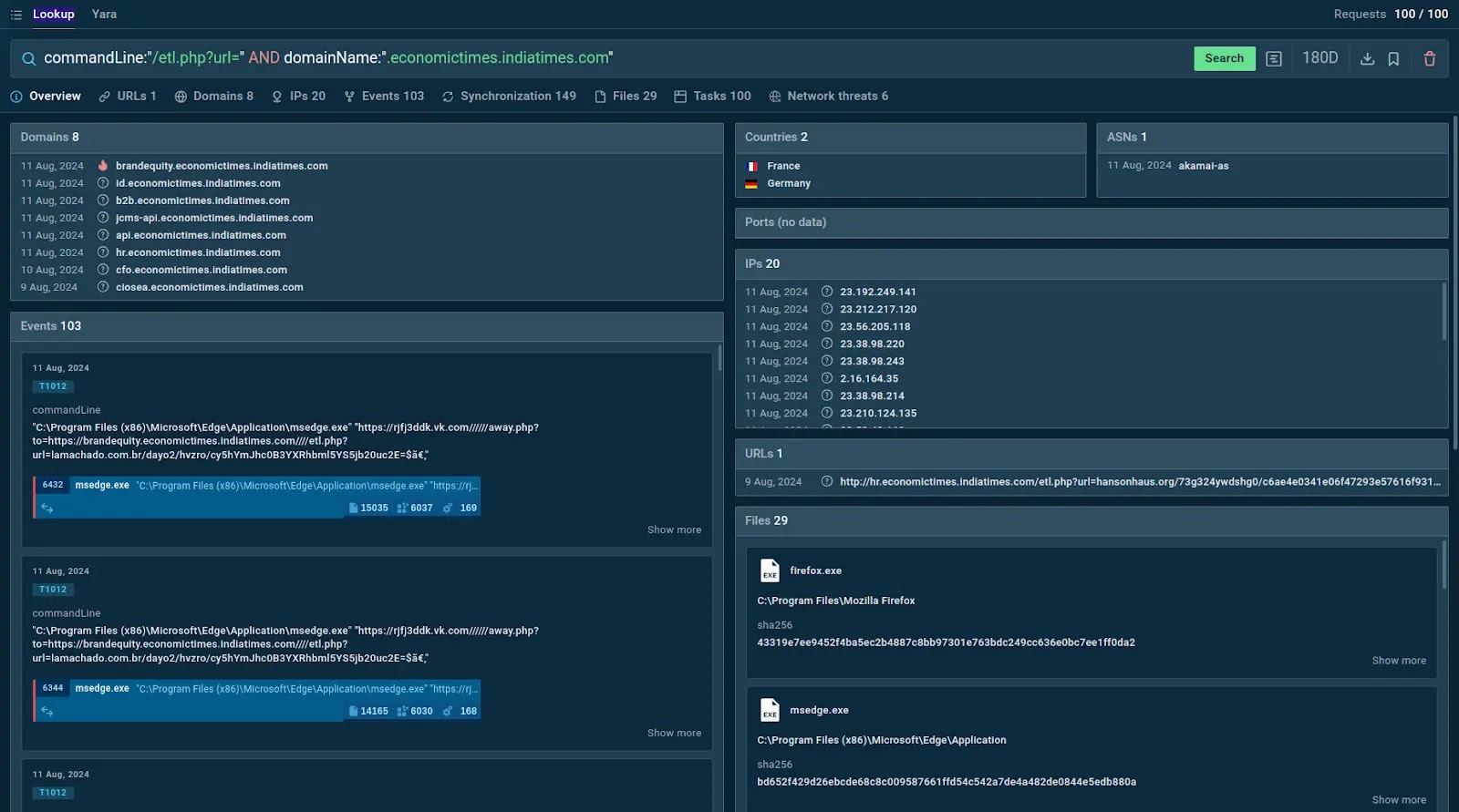
By using TI Lookup, security teams can identify and analyze such campaigns, gathering data on domains, IPs, and files involved.

2. New and Evolving Malware Families

New malware strains, like the recently discovered DeerStealer, pose significant threats. These malware types often employ advanced evasion techniques. TI Lookup allows users to gather information on these threats using YARA Search, providing detailed sandbox reports for further analysis.

Example: DeerStealer Malware 

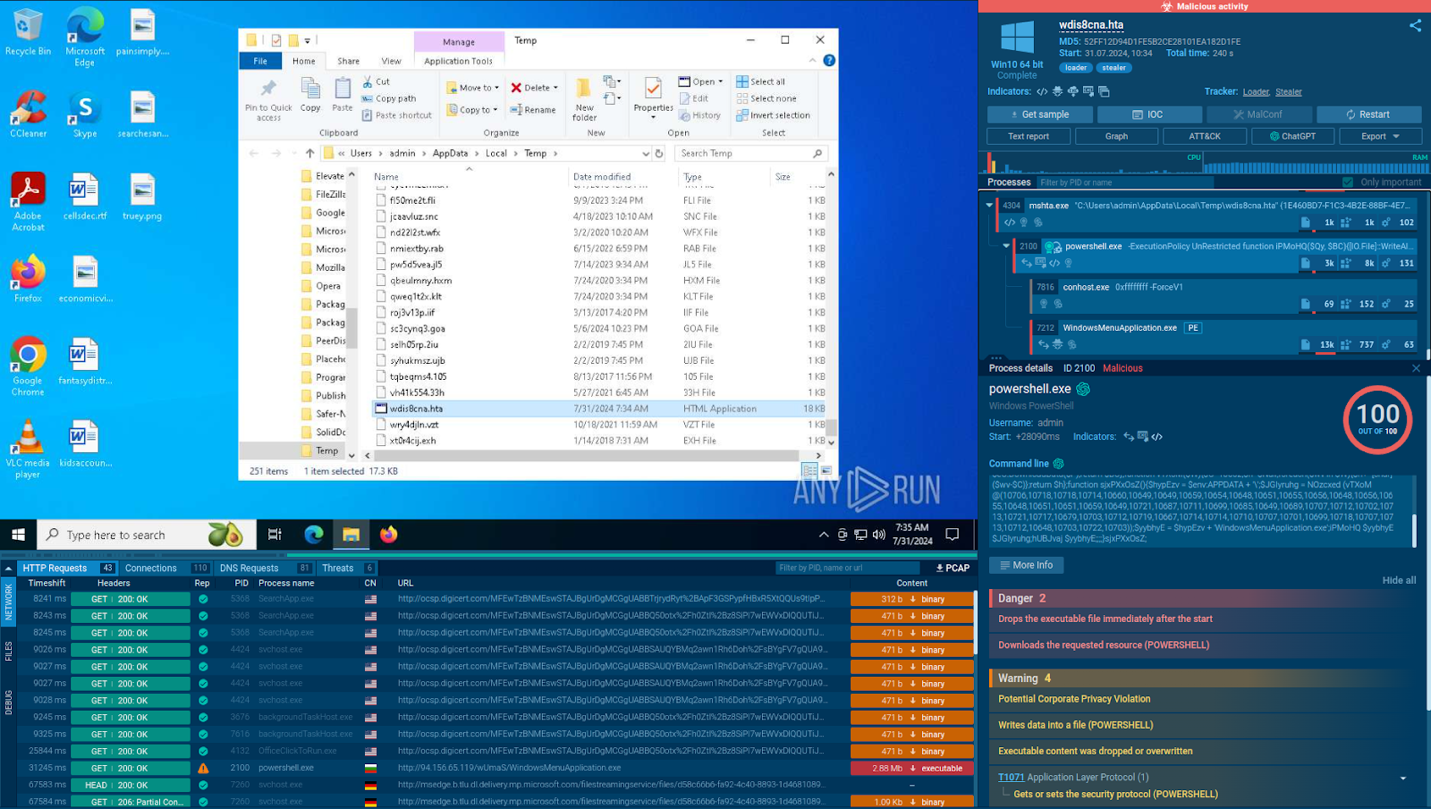
In July 2024, ANY.RUN discovered a new malware family called DeerStealer. This malware was distributed through a phishing campaign that mimicked the Google Authenticator website.

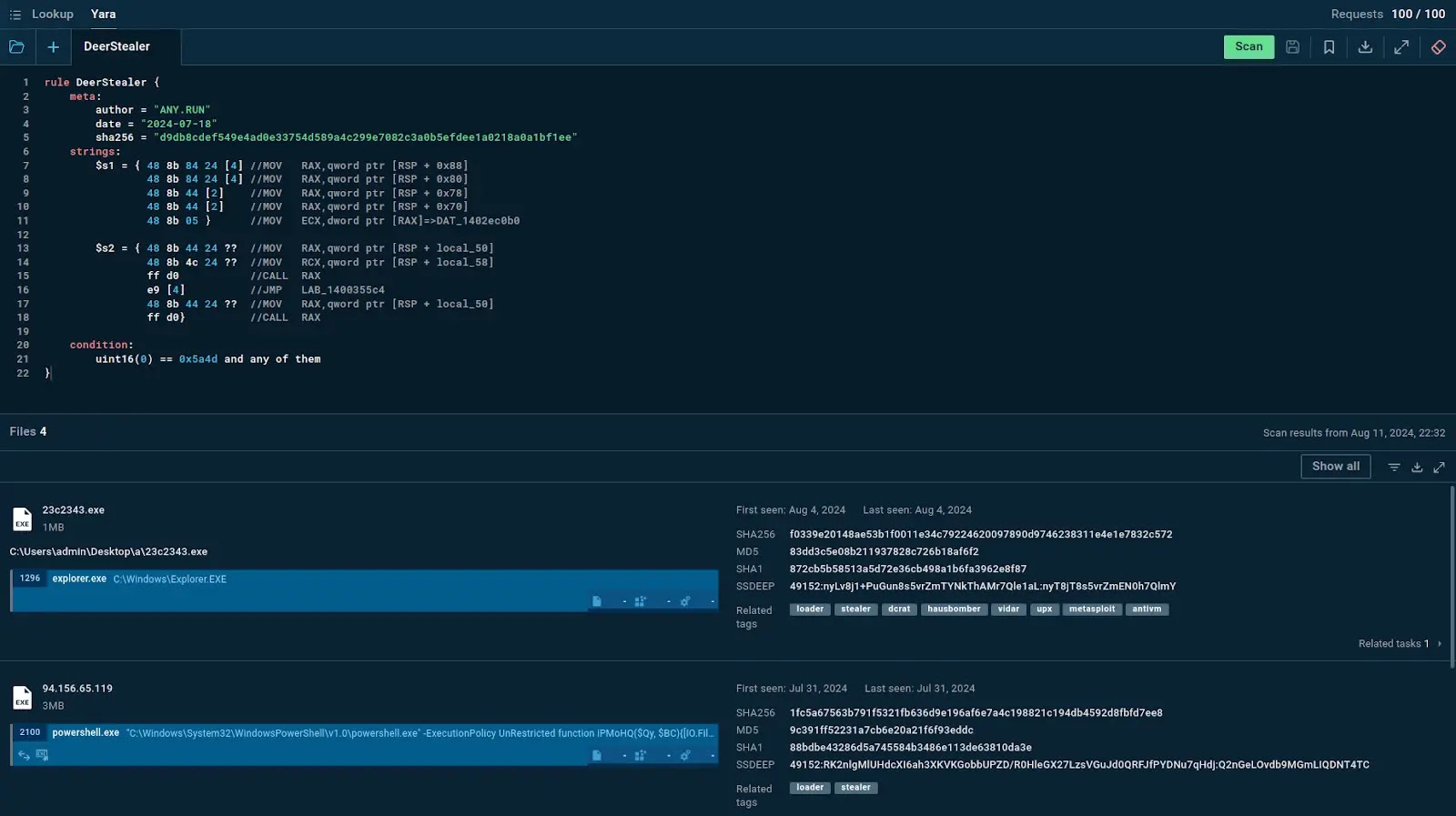
Using Threat Intelligence Lookup, we can efficiently gather information on the latest DeerStealer samples by utilizing YARA Search. This tool allows us to apply custom YARA rules to identify samples based on their content.

According to ANY.RUN analysis, The service provides four samples with their corresponding sandbox sessions, allowing us to take a closer look at how the threat operates and collect valuable intelligence. 

3. Tactics, Techniques, and Procedures (TTPs)

Attackers frequently update their tactics to exploit vulnerabilities and avoid detection. For instance, the new version of HijackLoader includes a User Account Control (UAC) bypass. TI Lookup can identify such updates using queries based on the MITRE ATT&CK framework.

Example: Samples of New HijackLoader Version 

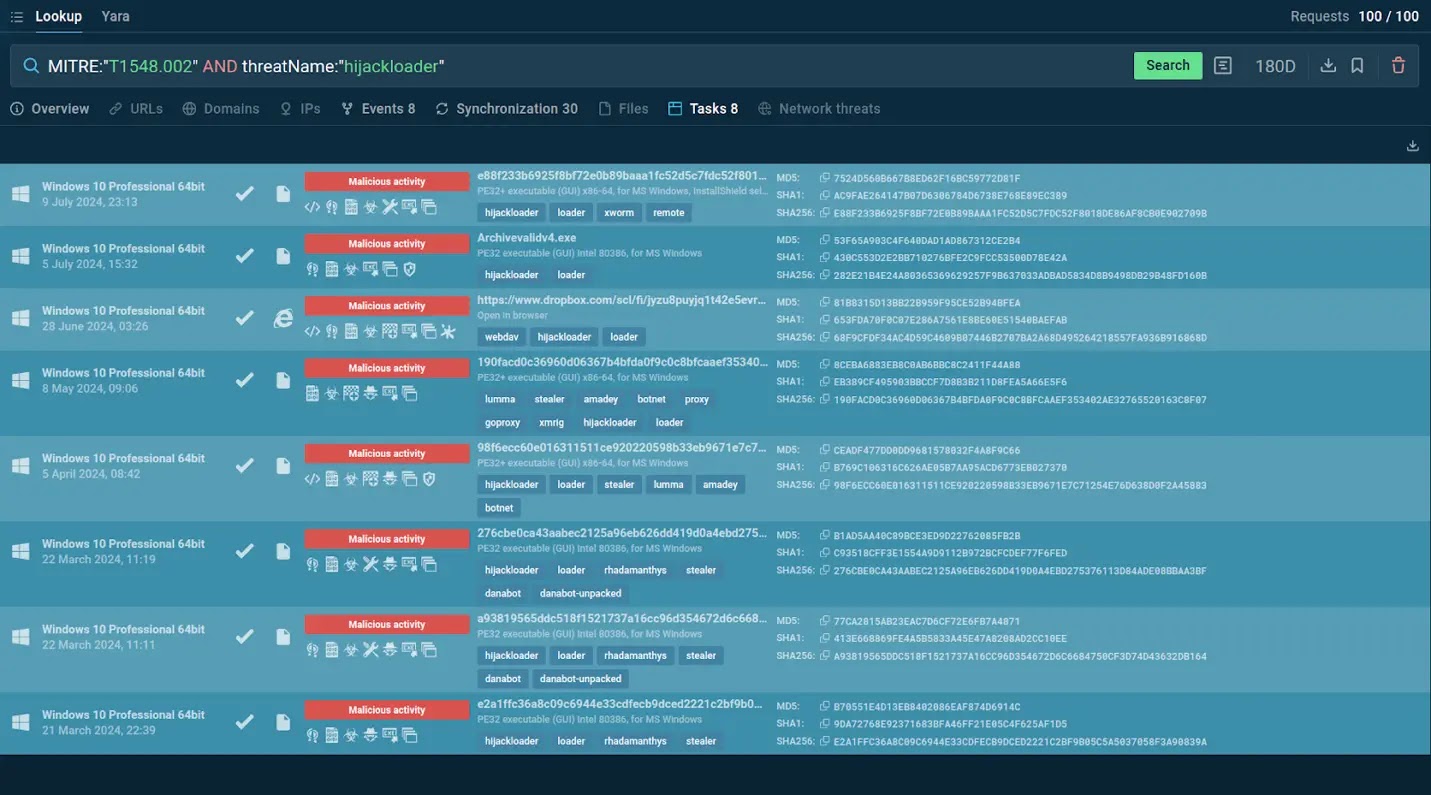
Earlier in 2024, HijackLoader received an update featuring a User Account Control (UAC) bypass (TT1548.002), allowing the malware to execute by bypassing Windows security controls. To find samples of this updated HijackLoader version, we can use the following query in TI Lookup.

To find samples of the new HijackLoader version, you can use the following query in TI Lookup: MITRE:”T1548.002″ AND threatName:”hijackloader”.

4. Exploitation of World Events

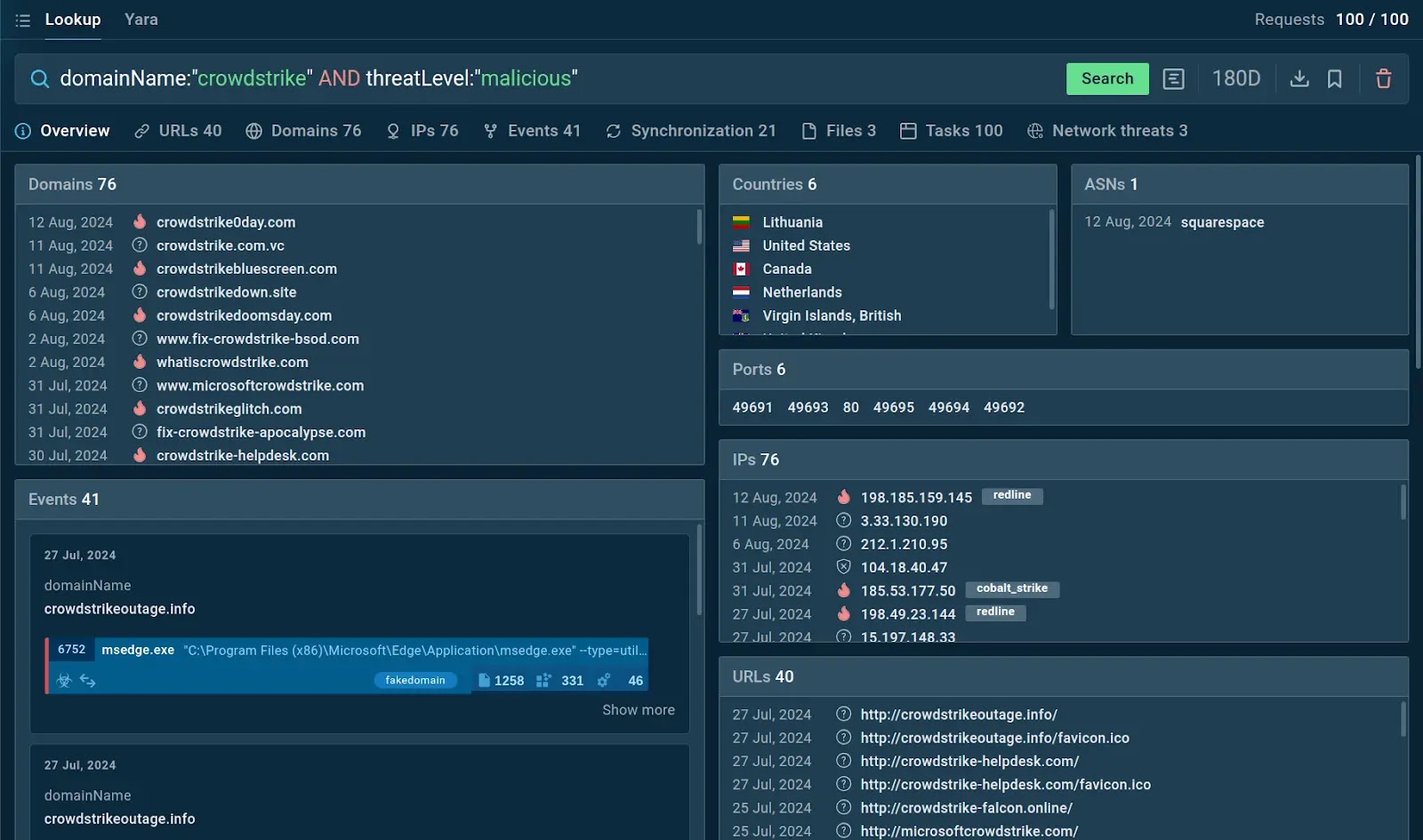
Cybercriminals often exploit global events to launch attacks. During the CrowdStrike outage, attackers launched phishing campaigns to exploit the confusion. TI Lookup helped identify malicious domains mimicking official sites, aiding in the investigation.

Example: CrowdStrike Incident 

ANY.RUN analysts were quick to identify threats exploiting a recent security incident, with TI Lookup playing a key role. One of their search queries (domainName:”crowdstrike” AND threatLevel:”malicious”) successfully detected domains mimicking the official CrowdStrike domain, which surfaced shortly after the event.

Additional Investigation Techniques with TI Lookup

  • Check Suspicious Connections: Quickly determine the threat level of suspicious IPs.
  • Enrich Intelligence on C2 Infrastructure: Stay updated on changes in command and control infrastructure used by attackers.
  • Discover Malicious Network Activity: Use Suricata IDS rules to detect and analyze network threats.
  • Learn about the Current Threat Landscape: Explore threats specific to certain regions based on local submissions.

Effective investigation of emerging threats relies on comprehensive threat intelligence. ANY.RUN’s TI Lookup provides a wealth of data, enabling organizations to better understand and mitigate these threats. By leveraging this tool, businesses can enhance their cybersecurity posture and ensure the safety and integrity of their systems.

About ANY.RUN

ANY.RUN supports over 400,000 cybersecurity professionals worldwide with its interactive sandbox and threat intelligence products, including TI Lookup, YARA Search, and Feeds. These tools help organizations quickly respond to incidents and learn more about emerging threats.

The post How to Investigate Emerging Cyber Threats in 2024 – SOC/DFIR Team Guide appeared first on Cyber Security News.
by Chris H Chris H No Comments

New MOVEit Auth Bypass Vulnerability Under Attack Now, Patch Immediately

Progress Software’s popular MOVEit Transfer and MOVEit Cloud-managed, file transfer solutions, have been found to contain a critical authentication bypass vulnerability (CVE-2024-5806).

The vulnerability, which exists in the products’ SFTP module, can allow attackers to bypass authentication and gain unauthorized access to sensitive data.

Researchers at watchTowr first disclosed the vulnerability and published a detailed technical analysis.

They found that an attacker could trick the system into granting access without proper credentials by manipulating certain parameters during the SSH authentication process.

Scan Your Business Email Inbox to Find Advanced Email Threats - Try AI-Powered Free Threat Scan

Exploit code for the vulnerability was released publicly mere hours after Progress Software issued a security bulletin acknowledging the flaw. This has led to a surge in attack attempts against vulnerable MOVEit installations.

Last year, MOVEit Transfer was the target of a massive cyber attack campaign by the Cl0p ransomware group, which exploited a zero-day SQL injection vulnerability to breach dozens of organizations and steal sensitive data.

Given MOVEit’s popularity for transferring critical business information, security experts fear this new vulnerability could lead to similar wide-scale attacks.

Progress Software has released patches for MOVEit Transfer versions 2024.0.2, 2023.1.6, and 2023.0.11, as well as MOVEit Gateway versions 2024.0.1 and later.

The company “strongly recommends all MOVEit Transfer and MOVEit Cloud customers apply these patches immediately.”

Researchers at Rapid7 have confirmed they could reproduce the exploit and achieve an authentication bypass against vulnerable, unpatched versions of both MOVEit Transfer and MOVEit Gateway. They advise organizations to treat this vulnerability with high priority.

Security professionals are urging all organizations using MOVEit Transfer or MOVEit Cloud to patch their systems without delay.

Applying vendor-provided security updates is critical to close off this attack vector before threat actors can exploit it to gain a foothold. Delaying patching could expose sensitive data to unauthorized access and theft.

As more details of this vulnerability come to light, it’s clear that speed is of the essence when applying mitigations. Organizations should refer to Progress Software’s security bulletin for the latest patching instructions and guidance to protect their MOVEit deployments from this critical flaw.

Free Webinar! 3 Security Trends to Maximize MSP Growth -> Register For Free

The post New MOVEit Auth Bypass Vulnerability Under Attack Now, Patch Immediately appeared first on Cyber Security News.
Top